Comparison of temperatures
| Jan | Feb | Mar | Apr | May | Jun | Jul | Aug | Sep | Oct | Nov | Dec |
| Scandinavia | -2 | -1 | 6 | 13 | 17 | 20 | 23 | 22 | 17 | 14 | 14 | 7 |
| London | 6 | 8 | 9 | 11 | 15 | 20 | 21 | 20 | 19 | 15 | 10 | 7 |
General note:
Below is an information overview. The conditions of entry, as well as the political and health situation, can change anywhere in the world at any time. We therefore recommend checking the website of the Foreign Office (www.gov.uk) before your departure.
Geography:
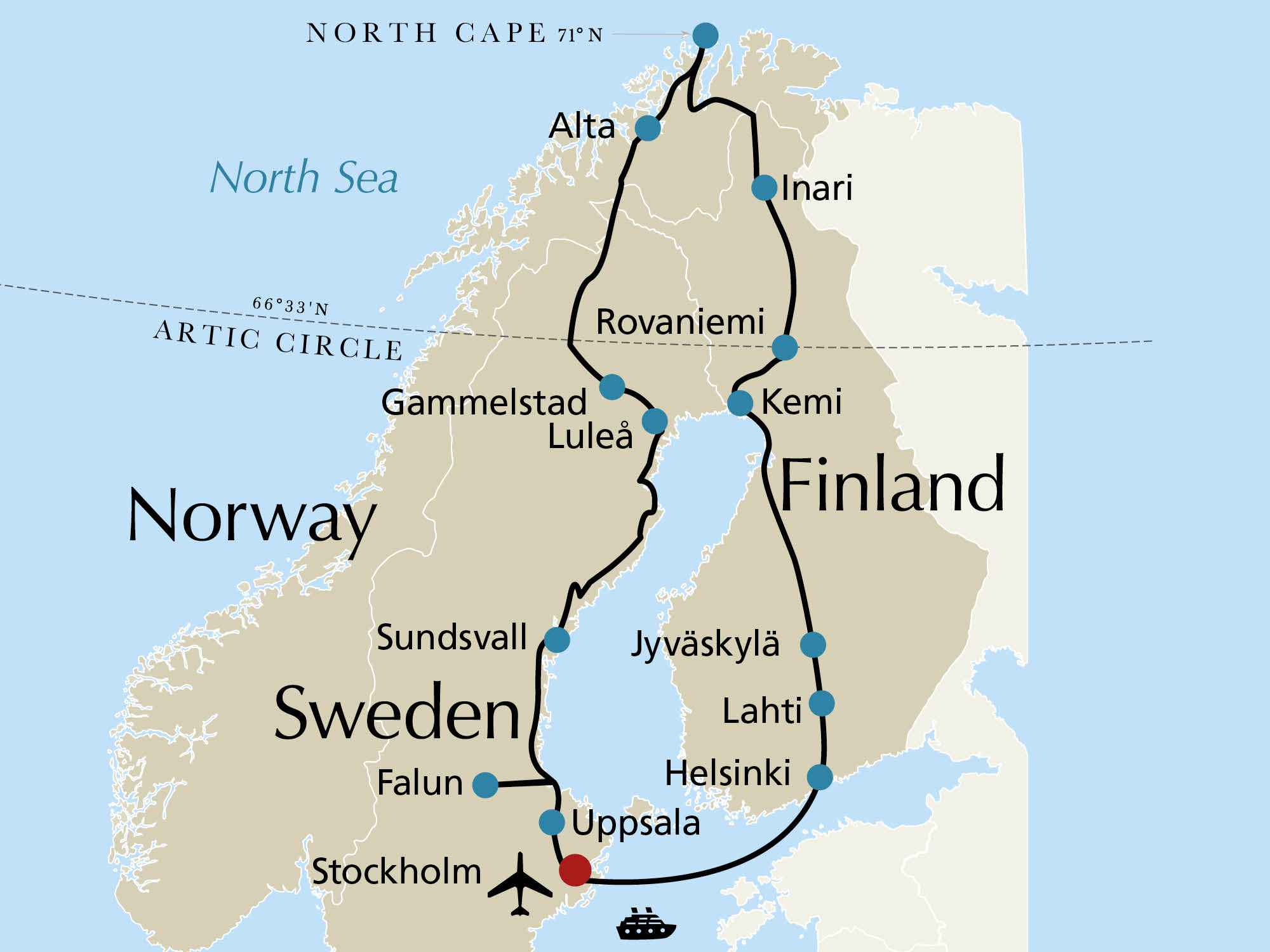
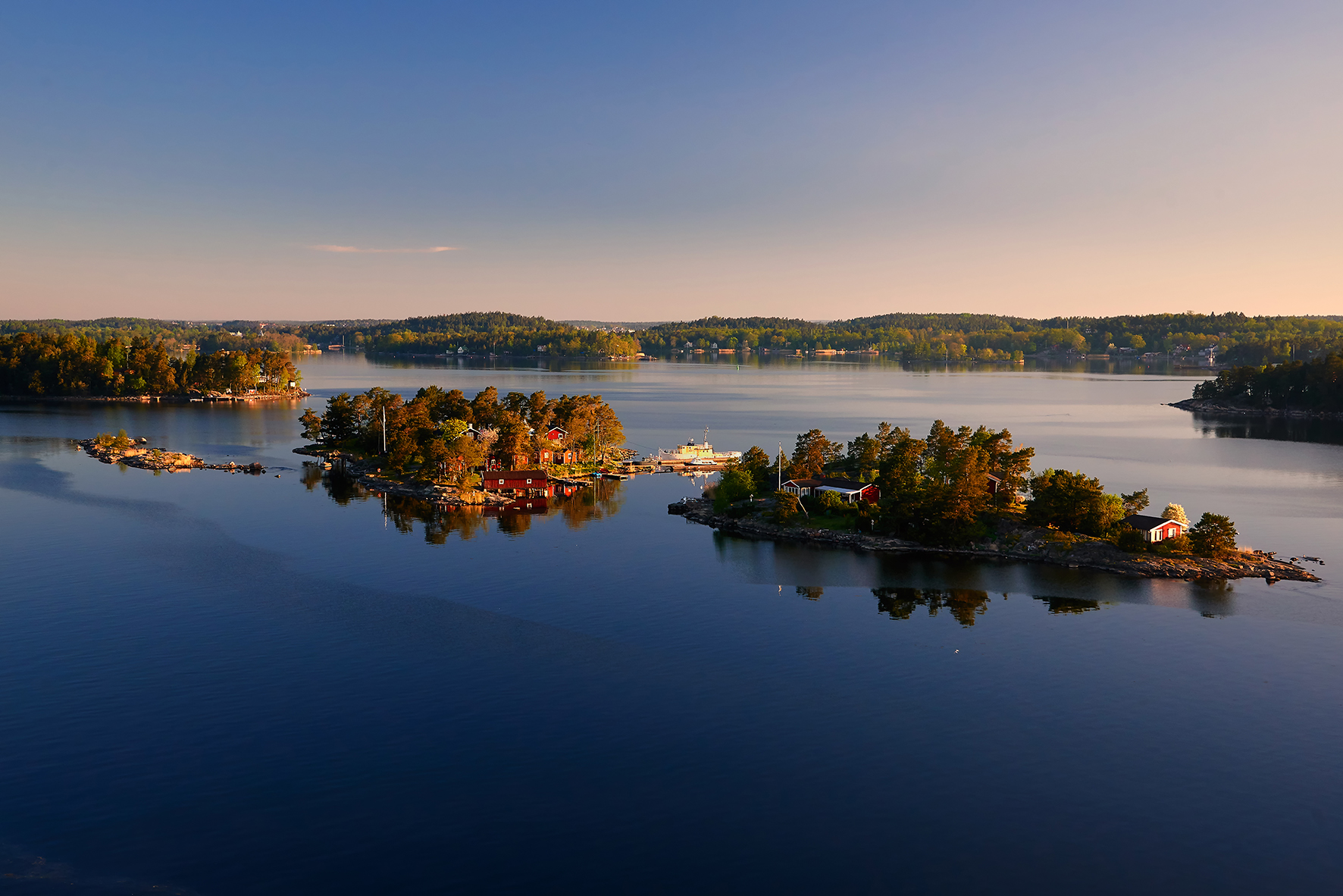
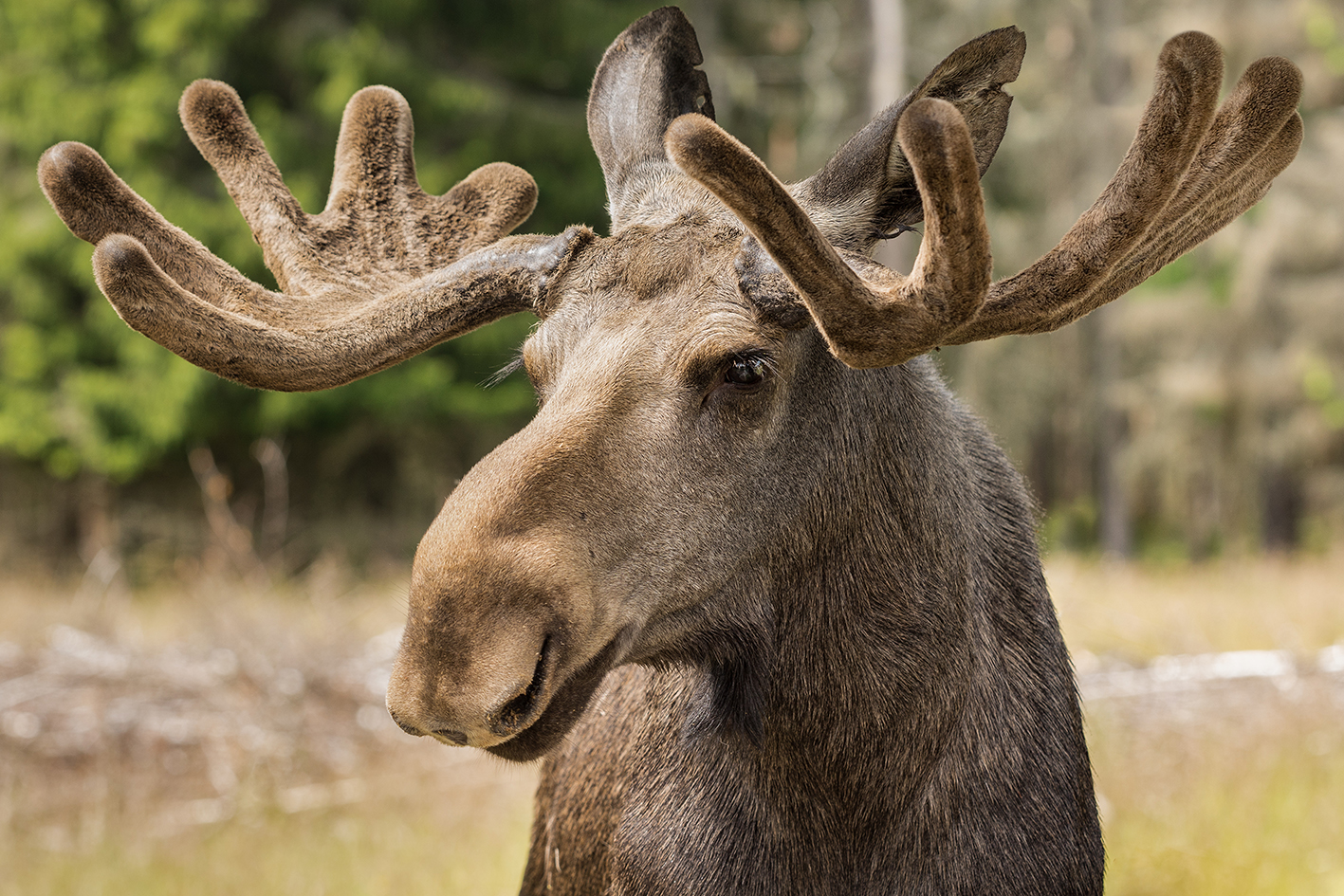
Sweden: The Nordic country is characterised by its vast forests, numerous lakes, and the unique archipelago coasts.
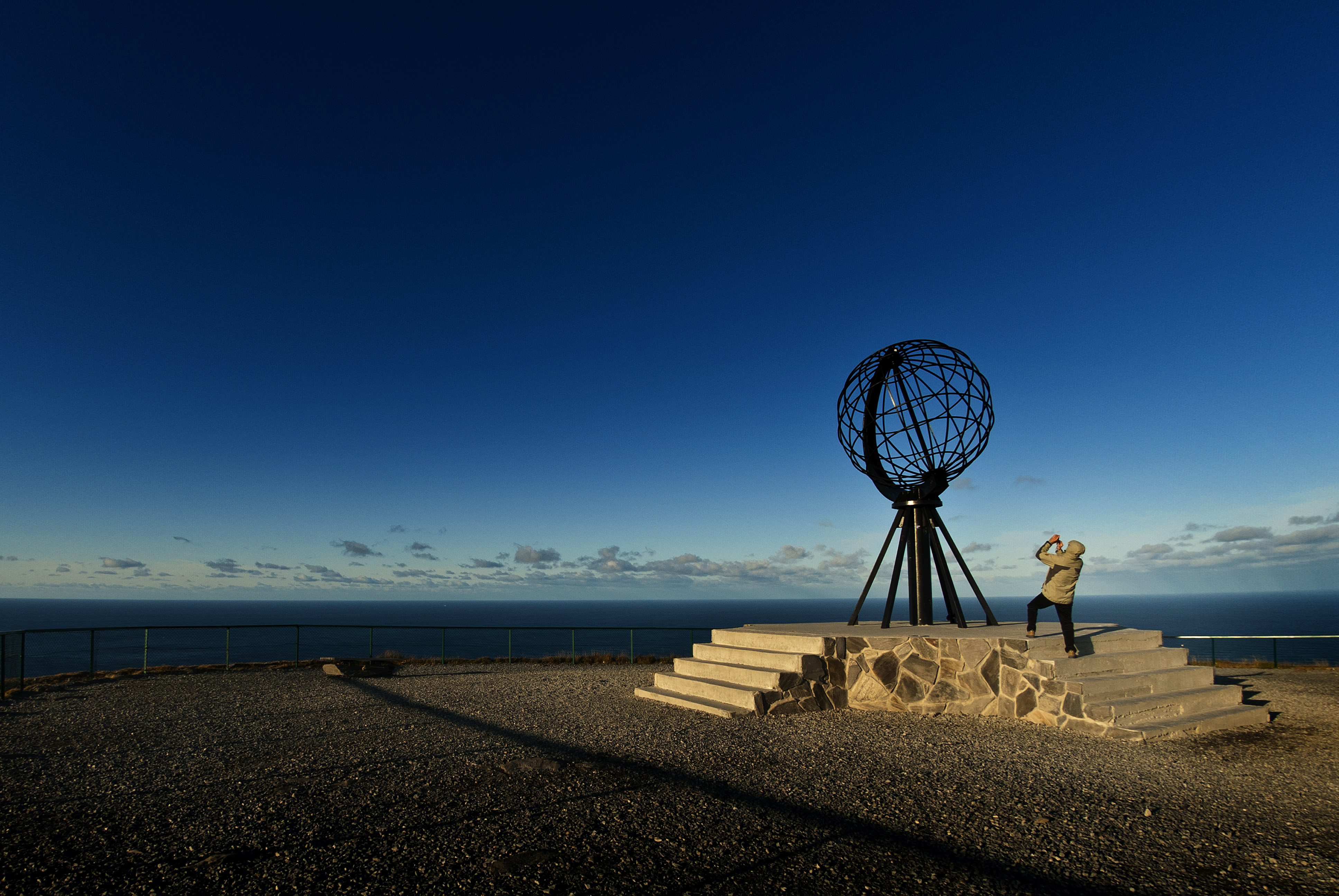
Norway: Known for its deep fjords, Norway also offers further natural spectacles such as rugged coastlines and mountainous landscapes, which stretch along the North Sea and the Atlantic Ocean.
Finland: One third of the Northern European country lies north of the Arctic Circle. It is characterised by thousands of lakes and islands, dense forests, as well as the arctic tundra in northern Lapland.
Form of government:
Sweden & Norway: Parliamentary monarchy
Finland: Parliamentary Government
Capital:
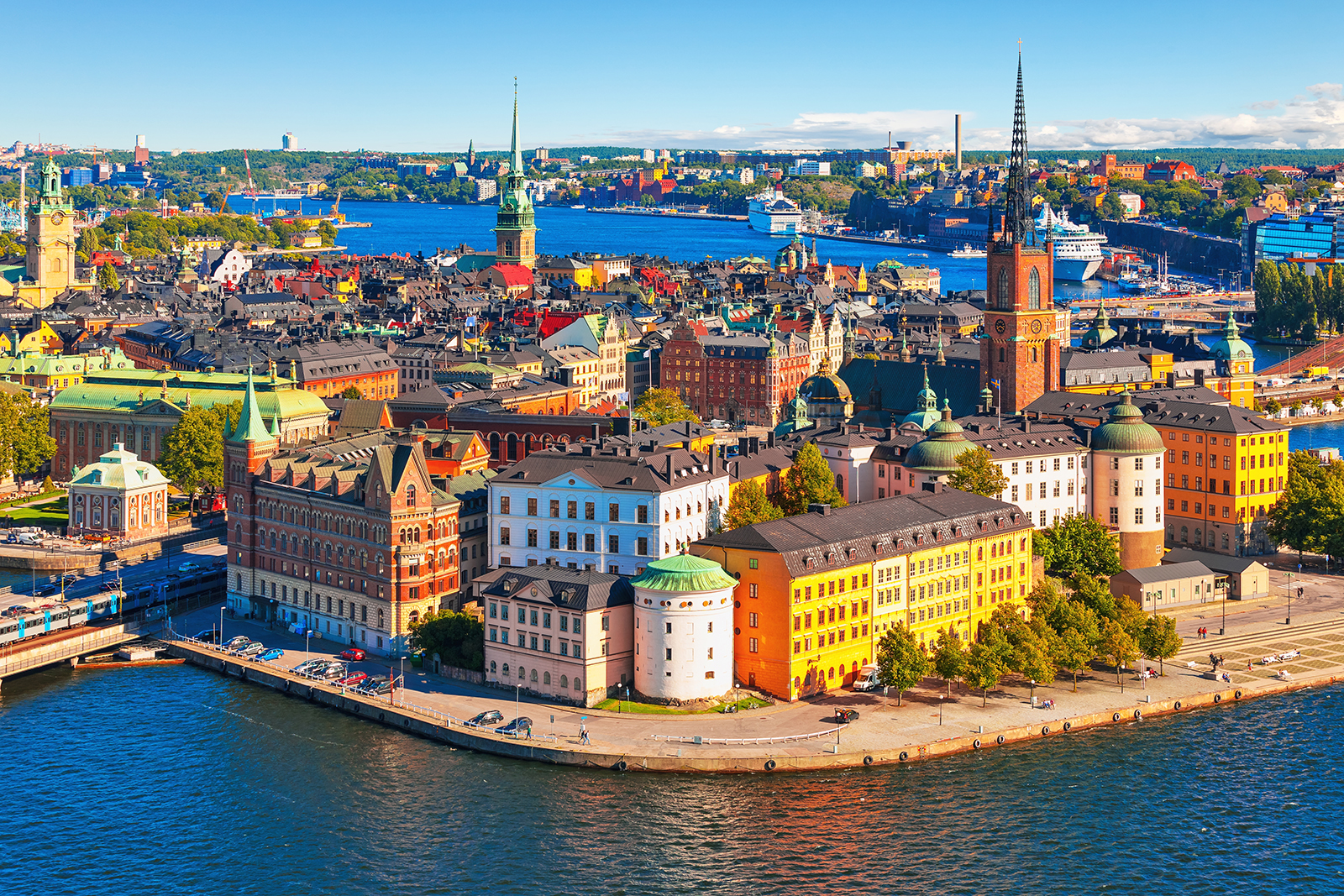
Sweden: Stockholm
Norway: Oslo
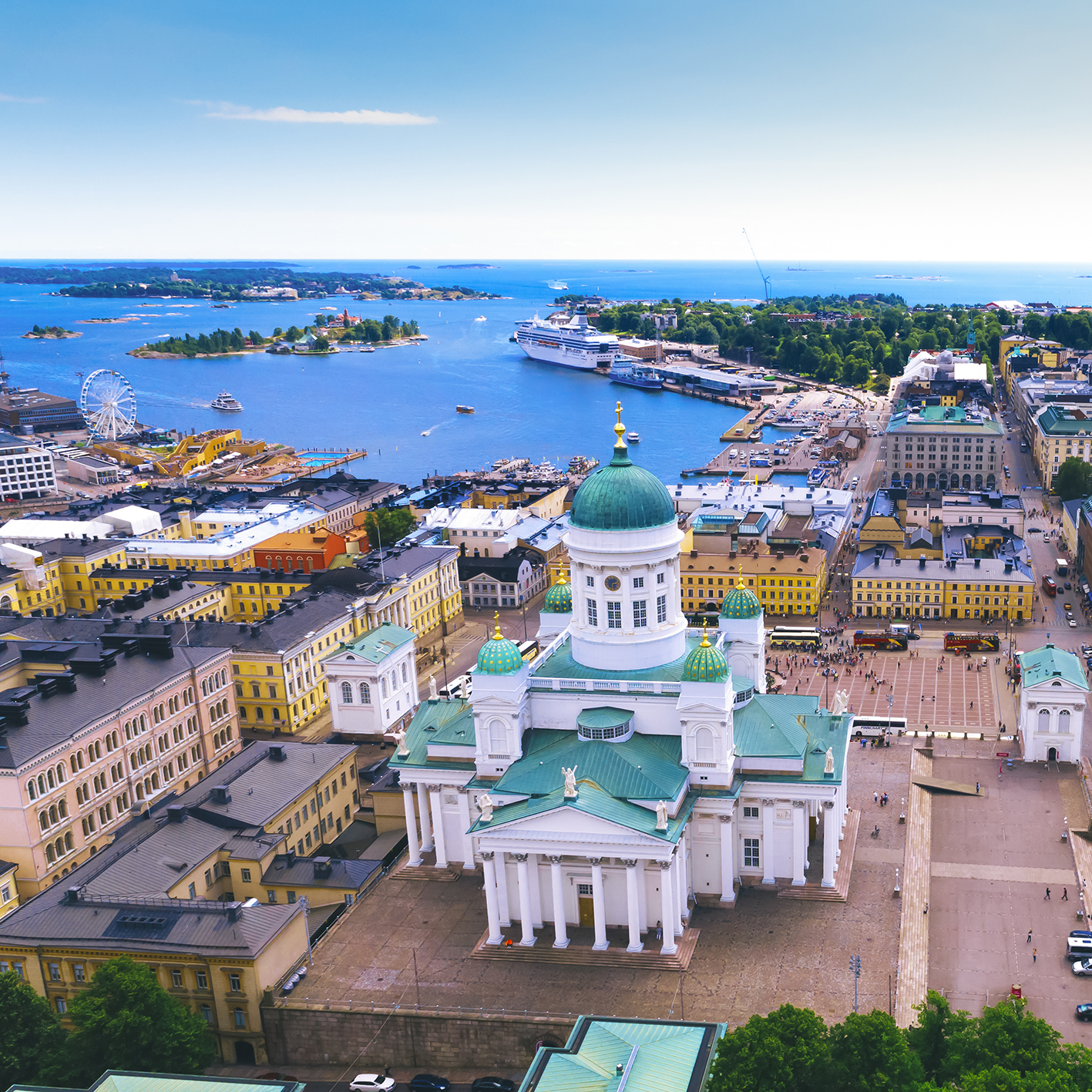
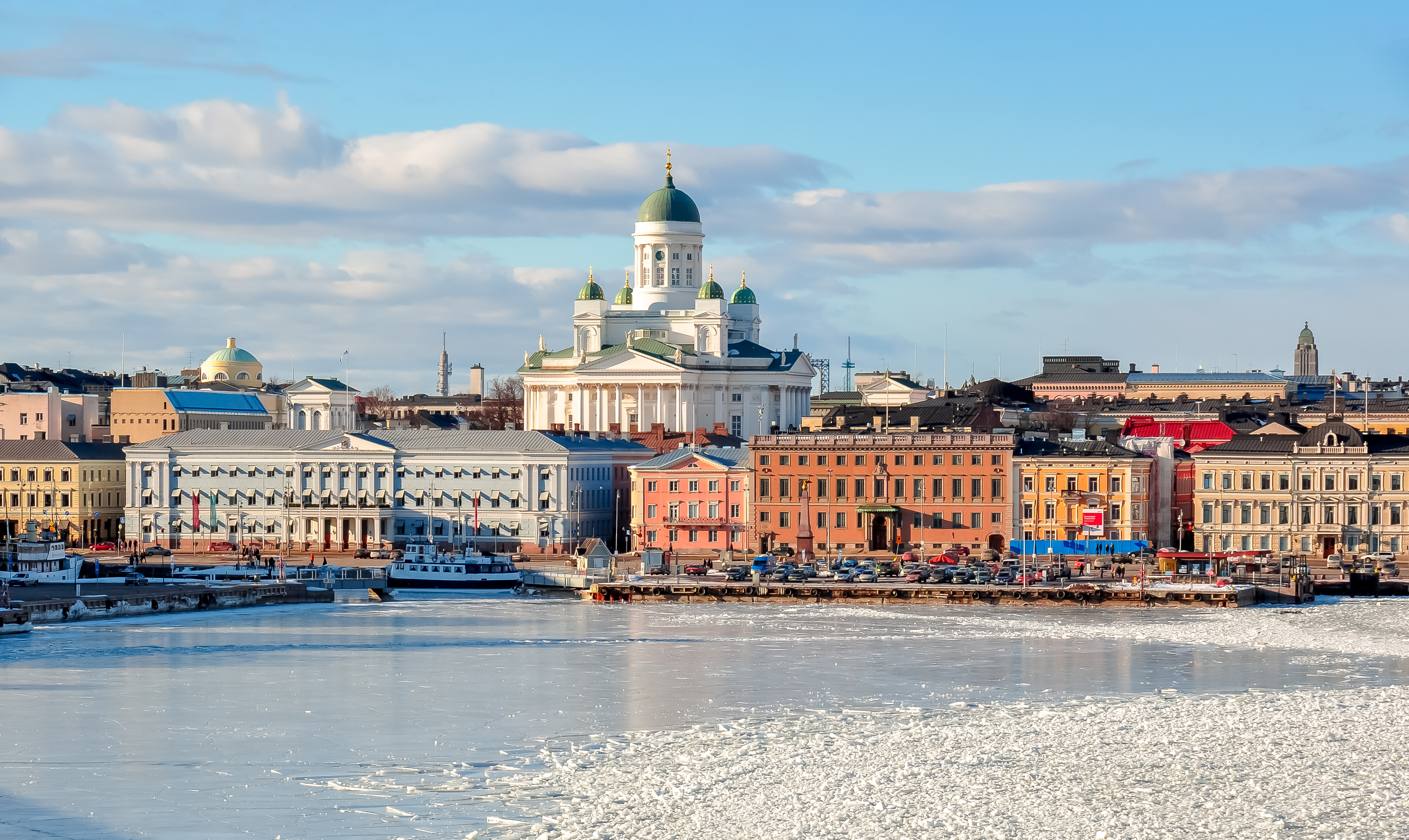
Finland: Helsinki
Religion:
Sweden, Norway & Finland: Predominantly Evangelical Lutheran, also Muslims, Catholics and smaller religions.
Language:
Sweden: Swedish; recognised minority languages: Sami, Finnish, Meänkieli (Finnish in Tornedalen), Yiddish, Romani Chib (a Roma language).
Norway: Norwegian; Sami (also an official national language) is spoken in northern Norway.
Finland: Finnish, Swedish
Climate:
Due to the size of Scandinavia, there are different climate zones. The northern regions are in the Arctic polar zone. The south has a temperate climate with moderately warm summers and relatively mild winters.
Local time:
The time difference between Sweden and Norway and the time zone in the United Kingdom is +1 hour throughout the year, and +2 hours from Finland.
Electricity:
230 volts alternating current, 50 hertz. An adapter is required.
Making Phone calls:
The area code for long-distance calls from UK to Sweden is 0046 (+46), to Norway 0047 (+47) and to Finland 00358 (+358). For calls to the UK, dial 0044 (+44) first. The 0 before the area code is omitted in each case.
Entry requirements for British citizens:
Norway, Sweden & Finland follow Schengen area rules. British citizens can travel to countries in the Schengen area for up to 90 days in any 180-day period without a visa. When travelling into the Schengen area, you must meet certain requirements. Your ‘British citizen’ passport must be:
• Less than 10 years old on the day you enter (check the ‘date of issue’)
• Valid for at least 3 months after the day you plan to leave (check the ‘expiry date’)
Since 12 October 2025, the new Entry/Exit System (EES) of the European Union has been in force. When travelling into and out of the Schengen area, for short stays, you may need to register your biometric details and answer the Schengen Border Code questions. EES may take each passenger a few extra minutes to complete so longer waiting queues can be expected. For more information, please visit: https://travel-europe.europa.eu/ees.
In addition, the ETIAS (European Travel Information and Authorisation System) is expected to come into force at the end of 2026. This is valid for three years or until the expiry date of the passport (whichever comes first) and entitles the holder to stays of up to 90 days in a 180-day period. Further information on fees, requirements and how to apply for ETIAS can be found on the official website: https://travel-europe.europa.eu/etias.
Nationals of other countries are advised to enquire at the Norwegian, Swedish & Finnish Embassies about the entry requirements applicable to them.
Whilst we endeavor to provide guidance where necessary, we cannot be responsible for any problems encountered (whether at any point of entry or elsewhere) in the event that passport and visa requirements are not satisfied.
Tour guide:
Your expert tour guides will be able to provide you with detailed information about the country, people, history, culture, etc. and offer advice and assistance for organising your trip. They can also help with room allocation and look forward to welcoming you with initial information. Here you will find out all you need to know and useful information about the trip. We have put together a varied programme including numerous highlights, enabling you to experience the culture and diversity of the landscapes that Scandinavia has to offer, and learn all about the countries and their people.
Additional package:
Although your trip already includes a comprehensive package you also have the option of choosing added extras on arrival.
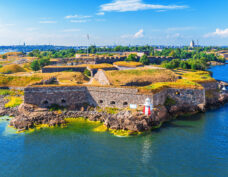
Explorer package: The package includes admission to the Vasa Museum and the Temppeliaukio rock church, the ferry ride to the fortress island of Suomenlinna (World Heritage), a visit to a reindeer farm and a visit to a mine in Falun (World Heritage): only £219* p. p.
Half board: Dinner as a buffet or at least a 2-course menu from the 3rd day onwards: only £349* p. p.
* Package prices may vary when booking on site.
Currency / Banks / Credit cards:
Sweden: The currency unit is the Swedish Krona (SEK).
1 Krona = 100 Öre. Exchange rate (March 2026): 1 GBP = 12.28 SEK; 1 SEK = 0.08 GBP.
Even the smallest amounts in Sweden are paid with debit or credit card. Many shops, cafés and restaurants no longer accept cash. Most banks in Sweden no longer handle cash.
It is recommended to carry an internationally accepted credit or debit card. Traveler‘s checks are no longer accepted in Sweden.
Norway: The currency unit is the Norwegian Krone (NOK).
1 Krone = 100 Öre. Exchange rate (March 2026): 1 GBP = 12.90 NOK; 1 NOK = 0.08 GBP.
Withdrawing cash from ATMs and paying with credit cards is almost universally possible. Cashless payment has also become the norm in Norway. Traveler‘s checks are no longer accepted in Norway.
Finland: The currency unit is the Euro (EUR). 1 Euro =100 Cent.
Exchange rate (March 2026): 1 GBP = 1.16 EUR; 1 EUR = 0.86 GBP.
Cashless payment has now become almost universal in Finland. Many transactions can only be conducted cashlessly.
This often applies to small amounts, such as using public toilets or buying a takeaway coffee. With the Girocard and PIN number, cash can be withdrawn from cash machines throughout Europe in the local currency.
Customs regulations:
When entering Sweden and Finland from a non-EU country, certain customs regulations apply, which include the following: Goods for personal use may be brought in duty-free. For air travel, these are goods worth up to 430 EUR (approx. 362 GBP). There are specific quantity restrictions for alcohol and tobacco products that may be imported duty-free. Amounts over 10,000 EUR (approx. 8,500 GBP) must be declared. There are strict regulations for the import of certain animals, plants, and products to ensure their protection and health in Sweden. Certain goods are prohibited or subject to import restrictions, e.g., weapons, certain medications and endangered animal and plant species. It is advisable to inform yourself in advance about the detailed regulations and any necessary declarations with customs (Sweden: https://www.tullverket.se/, Finland: https://tulli.fi/).
When entering Norway from a non-EU country, the following customs regulations apply: Goods worth up to 6,000 NOK (approx. 430 GBP) may be imported duty-free. Norway has specific quantity rules for duty-free alcohol and tobacco imports. For tobacco products, you can bring 200 cigarettes or 250 grams of other tobacco products. Cash amounts over 25,000 NOK (approx. 1,780 GBP) must be declared. Certain goods such as drugs, weapons, some types of plants and animals, and certain food products may be either restricted or not imported at all. For more detailed information and any necessary explanations or forms, it is advisable to consult the official Norwegian Customs website (https://www.toll.no/) or contact the relevant authorities directly.
Important: If you are travelling to Great Britain from outside the UK, your personal allowances mean you can bring in a certain amount of goods without paying tax or duty. If you go over your allowances you must declare all your goods and pay tax and duty on all the goods in that category. Please inform yourself about the current customs regulations: https://www.gov.uk/bringing-goods-into-uk-personal-use/arriving-in-Great-Britain.
Country-specific safety advice:
Crime: Petty crime such as pickpocketing is particularly common in city centres, tourist areas, and transit points such as ferries and airports. Keep money, IDs, driving license, and other important documents secure and separate, and ideally store copies electronically. Prefer cashless payments and only carry the cash you need for the day and no unnecessary valuables.
Special criminal provisions:
Sweden: Violating the photography and access prohibition of designated military protection sites is punishable by significant fines and/or imprisonment. Under Swedish weapons law, carrying, trading, and importing tear gas sprays is prohibited. The consumption of alcohol is prohibited in many public places. Drug possession – even in small quantities for personal use – is prohibited in Sweden, as is consumption itself (imprisonment of up to three years, significantly longer sentences in severe cases). Carrying knives is prohibited in public places.
Norway: Alcohol consumption is prohibited in public places and parks. Carrying even the smallest amounts of narcotics usually leads to arrest at the border, imposition of an entry ban or imprisonment.
Finland: Alcohol consumption in public is prohibited but is mostly tolerated as long as public order is not simultaneously disturbed.
Medical information:
At least 8 weeks before your trip, check the latest country-specific health advice from the National Travel Health Network and Centre (NaTHNaC) on the TravelHealthPro website (https://travelhealthpro.org.uk/countries). Each country-specific page has information on vaccine recommendations, any current health risks or outbreaks, and factsheets with information on staying healthy abroad.
Medical care:
In general, the level of care in Sweden, Norway and Finland is good to very good. FCDO has a list of medical providers in these countries where some staff will speak English. In Sweden, a co-payment dependent on the effort, of at least 200 SEK (approx. 15 GBP), is due immediately at every doctor‘s visit. In Norway, if you are a UK national, you can use your UK passport to get free state-provided medical treatment in hospitals. Some doctors may charge for their services elsewhere. At the emergency dental service (tannlegevakt), payment is generally required on-site in cash or usually by credit card.
To get medically necessary state healthcare, you need a Global Health Insurance Card (GHIC) or a European Health Insurance Card (EHIC).
It is important to take out appropriate travel insurance for your needs. A GHIC or EHIC is not an alternative to travel insurance and you should have both before you travel. A travel health insurance covers risks not assumed by the statutory health insurance companies (e.g. repatriation to the UK in the event of illness, treatment by private doctors or in private hospitals). Such policies usually also offer benefits not covered by state health insurance companies, e.g. the costs of repatriation.
Customers must ensure that they are in good physical and mental health in line with the trip in question. Customers must enquire about the physical mobility and psychological autonomy required for this trip.
All information is subject to change / Last updated: March 2026


 Travel highlights
 Europe
 Asia
Asia
 America
 Africa