Comparison of temperatures
| Jan | Feb | Mar | Apr | May | Jun | Jul | Aug | Sep | Oct | Nov | Dec |
| Madeira | 19 | 19 | 20 | 21 | 23 | 25 | 27 | 29 | 26 | 25 | 22 | 20 |
| London | 6 | 8 | 11 | 15 | 18 | 20 | 22 | 22 | 19 | 17 | 12 | 8 |
General note:
Below is an information overview. The conditions of entry, as well as the political and health situation, can change anywhere in the world at any time. We therefore recommend checking the website of the Foreign Office (www.gov.uk) before your departure.
Geography:
The island is located west of the Moroccan coast in the Atlantic Ocean and is an autonomous region belonging to Portugal.
Form of government:
Semi-presidential representative democracy
Capital:
Lissabon
Religion:
Predominantly Roman Catholic
Language:
The national language is Portuguese.
Climate:
Subtropical
Electricity:
220 V, 50 Hertz, an adapter is required.
Local time:
Western European Time (WET) applies in Portugal (including Madeira), with summer/winter time changes. There is no time difference with the UK throughout the year.
Making telephone calls:
To make phone calls to the UK, pre-dial 0044 (+44). To make phone calls from the UK to Madeira, pre-dial 00351 (+351). The zero before the area code is omitted.
Country and people:
The island of Madeira was formed by volcanic activity and is characterised by an impressive topography of steep cliffs, deep valleys and dense laurel forests. The island‘s capital, Funchal, located on the south coast, is a cultural and economic centre and is known for its historic architecture, flower-filled parks and lively market square. The people of Madeira are known for their hospitality and pride in their cultural traditions. The regional cuisine includes delicacies such as espetada (beef skewers), bolo do caco (a special bread) and, of course, Madeira wine, which is exported worldwide.
Recommended tips: for chambermaids £2 per day per person and in restaurants approx. £3 to £4 per meal per person. For group tours, approx. £3 to £4 per day per person is recommended for the tour guide and bus driver. Of course, it is up to each individual to decide whether and how much to tip.
Entry requirements for British citizens:
Madeira (Portugal) follows Schengen area rules. British citizens can travel to countries in the Schengen area for up to 90 days in any 180-day period without a visa. When travelling into the Schengen area, you must meet certain requirements. Your ‘British citizen’ passport must be:
• Less than 10 years old on the day you enter (check the ‘date of issue’)
• Valid for at least 3 months after the day you plan to leave (check the ‘expiry date’)
Since 12 October 2025, the new Entry / Exit System (EES) of the European Union has been in force. When travelling into and out of the Schengen area, for short stays, you may need to register your biometric details and answer the Schengen Border Code questions. EES may take each passenger a few extra minutes to complete so longer waiting queues can be expected. For more information, please visit: https://travel-europe.europa.eu/ees.
In addition, the ETIAS (European Travel Information and Authorisation System) is expected to come into force at the end of 2026. This is valid for three years or until the expiry date of the passport (whichever comes first) and entitles the holder to stays of up to 90 days in a 180-day period. Further information on fees, requirements and how to apply for ETIAS can be found on the official website: https://travel-europe.europa.eu/etias.
Nationals of other countries are advised to enquire at the Portuguese Embassy about the entry requirements applicable to them.
Whilst we endeavor to provide guidance where necessary, we cannot be responsible for any problems encountered (whether at any point of entry or elsewhere) in the event that passport and visa requirements are not satisfied.
Tour guides:
Your expert tour guides will be able to provide you with detailed information about the country, people, history, culture etc., and offer advice and assistance for organising your trip. They can also help with room allocation and look forward to welcoming you with initial information. Here you will find out all you need to know and useful information about the trip. We have put together a varied programme including numerous highlights, enabling you to experience the culture and diversity of landscape that Madeira has to offer, and learn all about the country and its people.
Additional package:
Although your trip already includes a comprehensive package, you also have the option of choosing added extras. We recommend booking the following packages:
Gourmet package: The package includes half-board in the form of 7× tasty buffet dinners: only £159* p. pers.
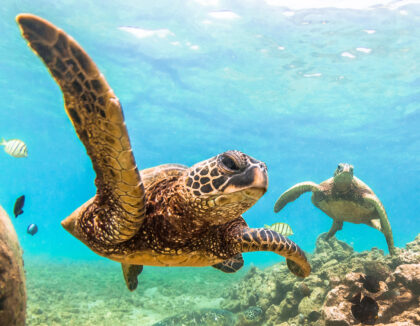
Explorer package: The package includes the two full-day excursions ‘Pico do Arieiro, Laurisilva Forest (World Heritage), Santana & Ponta de São Lourenço‘ and ‘Câmara de Lobos, Cabo Girão, Porto Moniz, Seixal & Bridal Veil Waterfall‘ as well as the boat trip to whales, dolphins & sea turtles: only £169* p. pers.
* Both packages can only be booked up to 7 days before arrival
Tourist tax:
On Madeira, a state tourist tax of up to 2€ (approx. £1.70) per room/night is payable locally (as of August 2026).
Currency:
The currency is the Euro. Exchange rate (as of August 2026): 1 GBP = 1.17 EUR; 1 EUR = 0.86 GBP.
Banks/Credit cards:
Cash withdrawals from ATMs and credit card payments are possible everywhere. Purchases can be paid for in cash, with most major credit cards and, in some cases, with an EC / Maestro card and PIN number. Cash withdrawals are possible with both credit cards and EC/Maestro cards and PIN numbers. Your bank may charge fees for this service. Please check with your bank for more information.
Customs regulations:
There are a number of products which have entry or exit limitations in Portugal from outside the European Union, Switzerland, Norway, Iceland and Liechtenstein. These include cultural goods, wild fauna and flora and products derived from these, vegetables and plant products, weapons and ammunition, medicines, tobacco and alcoholic beverages. Likewise, in the case of tobacco and alcoholic beverages, the amount must be declared and the corresponding taxes must be paid if you are carrying the following amounts or more: 200 cigarettes, 100 cigarillos, 50 cigars, 250 grams of tobacco, 1 litre of alcoholic beverages with a strength of more than 22%, 2 litres of alcoholic beverages with a strength of less than 22%, 4 litres of wine and 16 litres of beer. You can only carry the medicines you need, and they must be accompanied by a copy of the prescription or medical report.
Cash and other similar means of payment: If you are taking cash or pay-to-cash cheques in euros or other currencies, or prepaid cards not linked to a bank account and/or certain gold items, or a combination thereof, totalling an amount equal to or exceeding €10,000 (approx. £8,550) into or out of Portugal, you must fill out a Declaration (in person or electronically) and present at customs on departure or entry.
Souvenirs and gifts: Your purchases should not exceed €430 (approx. £370) per person if you are travelling by sea or air. You must declare anything that may be prohibited or subject to tax or duty.
More detailed customs information on importing goods can be obtained from the embassy of your destination country. Only there will you receive legally binding information.
Important: If you are travelling to Great Britain from outside the UK, your personal allowances mean you can bring in a certain amount of goods without paying tax or duty. If you go over your allowances you must declare all your goods and pay tax and duty on all the goods in that category. Please inform yourself about the current customs regulations: www.gov.uk/bringing-goods-into-uk-personal-use/arriving-in-Great-Britain.
Country-specific safety advice:
Madeira can experience storms, heavy rain and extreme weather changes throughout the year. In the event of a storm warning, please observe the information on cyclones abroad and the advice issued by the Federal Office for Civil Protection and Disaster Assistance. It is essential that you observe the flag signals for bathing safety and follow the instructions of the lifeguards. Pay attention to trail markings and do not leave marked hiking trails.
Crime: Particular caution is advised against pickpocketing and petty crime, especially in larger tourist centres. The number of pickpocketing incidents has increased significantly in recent months. Therefore, as with any holiday trip, only carry the essentials with you when going for walks or excursions. Large amounts of cash and original identity documents should be left in the hotel safe from the outset. If you carry credit cards at all, carry secure (PIN-protected) ones. Take photocopies of your documents with you on your trip. Stay away from crowds as much as possible and keep an eye on your valuables in places frequented by tourists, airports, including security areas, train stations, underground stations, buses, etc. Carry your valuables close to your body.
Special criminal provisions:
Pepper spray is covered by the Weapons Act on the Azores; possession is only authorised for holders of a cat. E firearms licence. Violations usually result in criminal charges.
Medical information:
At least 8 weeks before your trip, check the latest country-specific health advice from the National Travel Health Network and Centre (NaTHNaC – https://travelhealthpro.org.uk/countries) on the TravelHealthPro website. Each country-specific page has information on vaccine recommendations, any current health risks or outbreaks, and factsheets with information on staying healthy abroad.
Medical care:
The quality of medical care is generally satisfactory. In Madeira, anyone with state insurance in the UK is entitled to medical treatment – where urgently necessary – by doctors, dentists, hospitals etc. registered with the foreign statutory health insurance association.
It is strongly recommended to take out international health insurance with the option of medical repatriation to the UK.
Customers must ensure that they are in good physical and mental health in line with the trip in question. Customers must enquire about the physical mobility and psychological autonomy required for this trip.
All information is subject to change/Last updated: August 2026



 Travel highlights
 Europe
 Asia
Asia
 America
 Africa